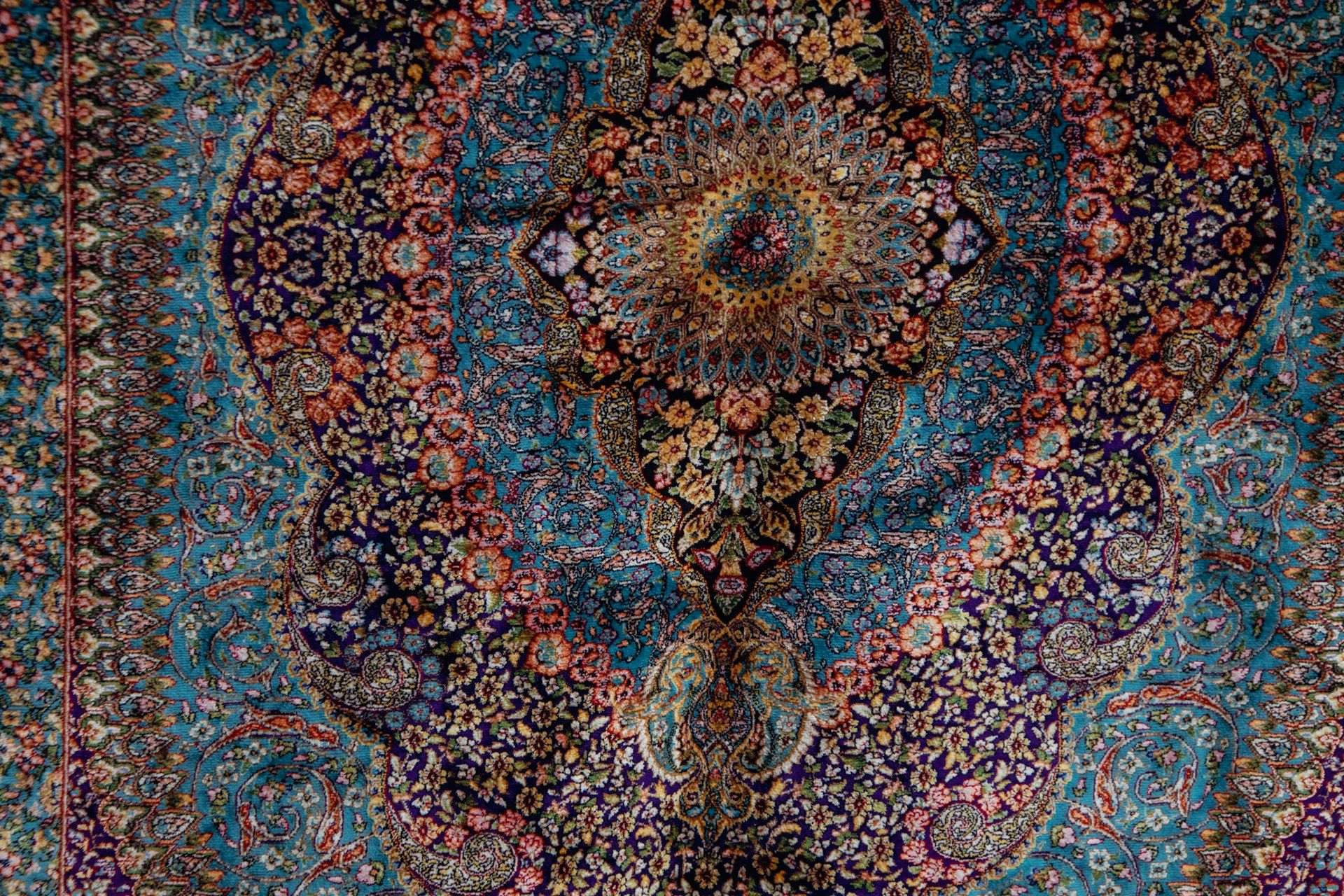
The Art of Carpet Weaving: Decoding Azerbaijani Symbols
In Azerbaijan, a carpet is never just a carpet. It is a story, a prayer, a family tree, and a work of art—all woven into wool and silk.
The tradition of Azerbaijani carpet weaving is so significant that UNESCO has recognized it as part of the Intangible Cultural Heritage of Humanity. Each region has its own style, each pattern carries meaning, and each knot is tied by hand with techniques passed down through generations.
In this guide, we'll teach you how to "read" a carpet and understand the language hidden in its threads.
The Seven Carpet Schools of Azerbaijan
Azerbaijan is divided into seven major carpet-weaving regions, each with distinct styles, colors, and motifs.
1. Baku School
- Characteristics: Geometric patterns, medallions, dark blue and red colors.
- Famous Carpets: "Khila-Bukhara" and "Khila-Afshan."
2. Ganja-Kazakh School
- Characteristics: Large star medallions, bold colors (red, blue, yellow).
- Famous Carpets: "Fachralo" and "Borchali."
3. Karabakh School
- Characteristics: Floral motifs, nightingales, roses, softer colors.
- Famous Carpets: "Chelaberd" (the Eagle Carpet) and "Lampa."
4. Shirvan School
- Characteristics: Small, repeating geometric patterns, prayer rugs.
- Famous Carpets: "Maraza" and "Salyan."
5. Tabriz School
- Characteristics: Highly detailed, often depicting hunting scenes or gardens.
- Famous Carpets: "Ovchulug" (Hunting Carpet).
6. Nakhchivan School
- Characteristics: Dragon motifs, S-shaped patterns.
- Famous Carpets: "Garabagh" and "Nakhchivan."
7. Quba-Shirvan School
- Characteristics: Prayer rugs, mihrab (niche) designs.
- Famous Carpets: "Gollu Chichi."
Decoding the Symbols: What Does Your Carpet Say?
Every symbol on an Azerbaijani carpet has meaning. Here are some of the most common:
🔹 The Buta (Paisley)
The teardrop-shaped "buta" represents a flame, a seed, or a cypress tree. It symbolizes life, eternity, and the Zoroastrian flame.
🔹 The Dragon (Ajdaha)
A symbol of power and protection. Often paired with the phoenix in "Dragon and Phoenix" carpets, representing the balance of male and female energies.
🔹 The Scorpion
A protective symbol meant to ward off evil spirits.
🔹 The Ram's Horn
Represents fertility, strength, and masculinity.
🔹 The Star (Ulduz)
Symbolizes happiness, hope, and the divine.
🔹 The Tree of Life
A central motif in many carpets, representing immortality and the connection between earth and heaven.
The Knots: The Secret to Quality
The quality of a carpet is measured by the number of knots per square meter. The more knots, the finer and more detailed the design.
- Low Quality: 40,000–80,000 knots/m²
- Medium Quality: 80,000–160,000 knots/m²
- High Quality: 160,000–400,000 knots/m²
- Museum Quality: 400,000+ knots/m²
A single high-quality carpet can take 6 months to 2 years to complete.
Natural Dyes: The Colors of the Earth
Traditional Azerbaijani carpets use natural dyes extracted from plants, minerals, and insects:
- Red: Madder root
- Blue: Indigo plant
- Yellow: Saffron, pomegranate skin
- Green: A combination of indigo and yellow
- Brown: Walnut shells
- Black: Oak bark with iron oxide
These natural dyes give the carpets their rich, earthy tones that age beautifully over time.
The Azerbaijan Carpet Museum: A Must-Visit
Located on Baku Boulevard, the Azerbaijan Carpet Museum is shaped like a rolled-up carpet—a stunning piece of architecture in itself.
What You'll See:
- Over 1,000 carpets from different regions and eras.
- Live demonstrations of carpet weaving.
- Exhibits on the history, symbolism, and techniques of carpet making.
- The oldest carpet in the collection dates back to the 17th century.
Pro Tip: Don't rush. Spend at least 2 hours here. The audio guide is excellent.
Buying a Carpet: A Guide for Travelers
Thinking of bringing home a piece of Azerbaijan? Here's what you need to know:
Where to Buy:
- Old City Bazaars: Authentic but haggle hard.
- Carpet Museum Shop: High quality, fixed prices, certificates of authenticity.
- Taza Bazaar: Local market with good prices.
What to Look For:
- Handmade vs. Machine-Made: Check the back. Handmade carpets have slight irregularities; machine-made are perfectly uniform.
- Knot Density: Ask the seller. Higher density = higher price.
- Natural Dyes: Smell it. Natural dyes have an earthy smell; chemical dyes smell synthetic.
Price Range:
- Small (1m x 1.5m): $200–$800
- Medium (2m x 3m): $800–$3,000
- Large/Antique: $3,000–$20,000+
Export Rules:
Carpets over 100 years old require special permission to export. Always ask for a certificate.
Conclusion
To understand Azerbaijan, you must understand its carpets. They are woven history, portable art, and a language of symbols that has survived empires, wars, and modernization.
So next time you see an Azerbaijani carpet, don't just walk on it—read it.
Next up in our series: Sheki Khans' Palace: A Glass and Light Masterpiece