Ateshgah Fire Temple: Where Zoroastrianism Meets Hinduism
In the industrial suburb of Surakhani, just outside Baku, stands a place where two ancient religions met and worshipped side by side for centuries.
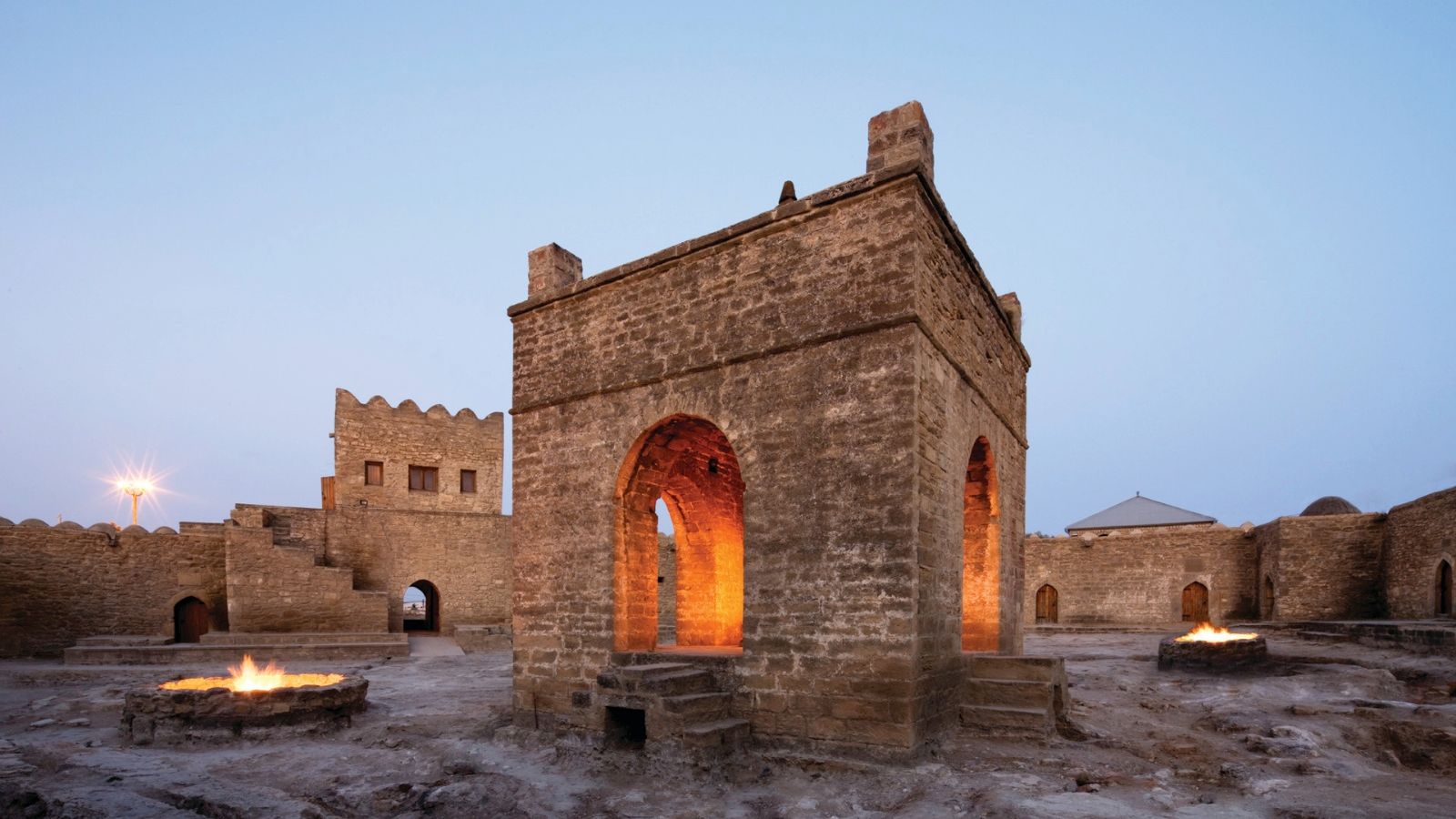
The Ateshgah Fire Temple is a pentagonal fortress-like complex built around a natural eternal flame. For Zoroastrians, it was a sacred site of fire worship. For Hindu and Sikh traders traveling the Silk Road, it was a temple to Lord Shiva.
This is the story of a spiritual crossroads.
The Eternal Flame: A Gift from the Earth
Like Yanardag, the fire at Ateshgah is fueled by natural gas seeping from the earth. The name "Ateshgah" literally means "House of Fire" in Persian.
For thousands of years, before the industrial extraction of oil and gas began, the Absheron Peninsula was dotted with such flames. To ancient travelers, these fires that burned without wood or coal were nothing short of miraculous.
The Zoroastrian Roots
Zoroastrianism, one of the world's oldest monotheistic religions, venerates fire as a symbol of divine light and truth. Azerbaijan, with its natural flames, became a center of Zoroastrian worship. Pilgrims traveled from Persia to pray at these sacred fires.
The Hindu Chapter: Traders and Ascetics
In the 17th and 18th centuries, the temple took on a new life. Indian traders—Hindus and Sikhs—traveling the Silk Road discovered the site and saw it as a manifestation of Jwala Ji (the eternal flame of Lord Shiva).
The Inscriptions
Walking through the temple today, you'll notice inscriptions in Sanskrit, Punjabi, and Devanagari script carved into the stone walls. These inscriptions, dating from the 1700s, include prayers, donor names, and references to Hindu deities.
One inscription reads: "I, Kanchanagar, have completed this temple. May it be auspicious."
The Ascetic Cells
Around the central courtyard are small stone cells where Hindu ascetics (sadhus) lived, meditated, and performed rituals. Some practiced extreme austerity, lying on beds of nails or hanging weights from their bodies as acts of devotion.
The Architecture: A Fortress of Faith
The current structure was built in the 18th century, though the site itself is much older.
- The Pentagonal Courtyard: The temple is designed as a caravanserai (inn) with rooms surrounding a central open space.
- The Altar: In the center of the courtyard is a stone altar where the eternal flame once burned. Today, the flame is artificially maintained for visitors, as the natural gas pressure dropped due to industrial drilling.
- The Four Corner Fires: In addition to the central flame, there are four smaller fire altars in the corners, representing the elements.
The Decline and Revival
By the late 19th century, the natural gas pressure began to drop due to oil extraction in the region. The eternal flame weakened and eventually went out. The Hindu and Zoroastrian communities gradually left.
In the Soviet era, the temple was turned into a museum. Today, it is a UNESCO World Heritage site and one of the most visited attractions near Baku.
The Modern Flame
The fire you see today is fed by a gas pipe from the city. While not "natural" in the ancient sense, it still serves as a powerful symbol of the spiritual history of the site.
Practical Information for Travelers
📍 How to Get There
- By Taxi/Bolt: About 30 minutes from Baku city center. Costs around 10-12 AZN.
- By Bus: Take Bus #184 from Koroglu Metro Station to Surakhani.
- By Tour: Most "Absheron Peninsula Tours" combine Ateshgah with Yanardag and the Bibi-Heybat Mosque.
🎟️ Tickets & Opening Hours
- Opening Hours: Daily from 10:00 AM to 6:00 PM.
- Entrance Fee: Approximately 8 AZN for foreign citizens.
💡 Tips for Visiting
- Combine with Yanardag: Both sites are about 15 minutes apart. Visit both in one trip.
- Guided Tours: Highly recommended. The inscriptions and history are easy to miss without context.
- Photography: The courtyard is very photogenic, especially in the late afternoon light.
Conclusion
The Ateshgah Fire Temple is a testament to Azerbaijan's role as a crossroads of civilizations. It is a place where Persian fire worshippers, Indian traders, and Silk Road travelers all found common ground in the sacred flame.
To visit Ateshgah is to witness the beautiful complexity of human faith.
Next up in our series: The Art of Carpet Weaving: Decoding Azerbaijani Symbols